Thursday, April 4, 2019

Katak dan Kodok, Apa Bedanya?

https://www.mongabay.co.id/2017/11/27/katak-dan-kodok-apa-bedanya/


Katak dan Kodok, Apa Bedanya?


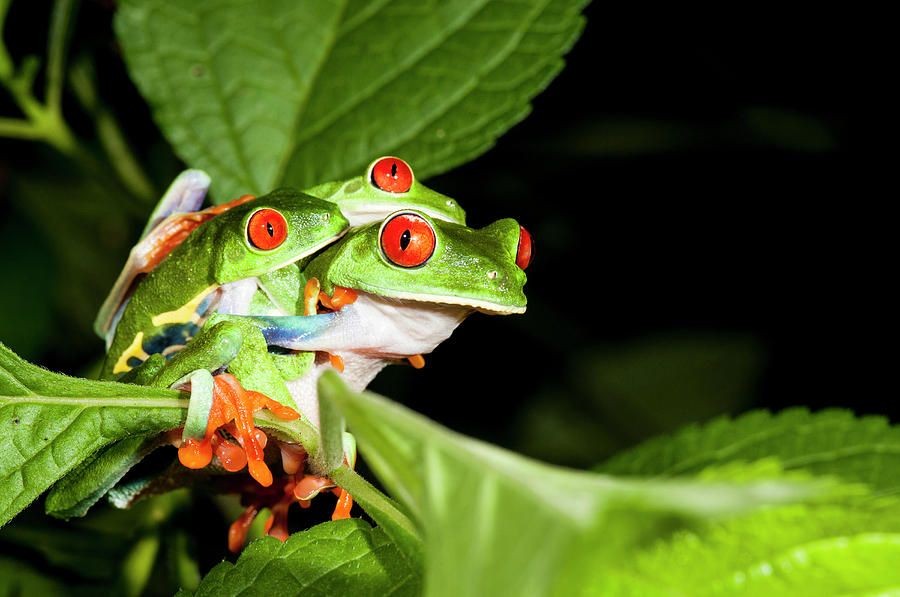
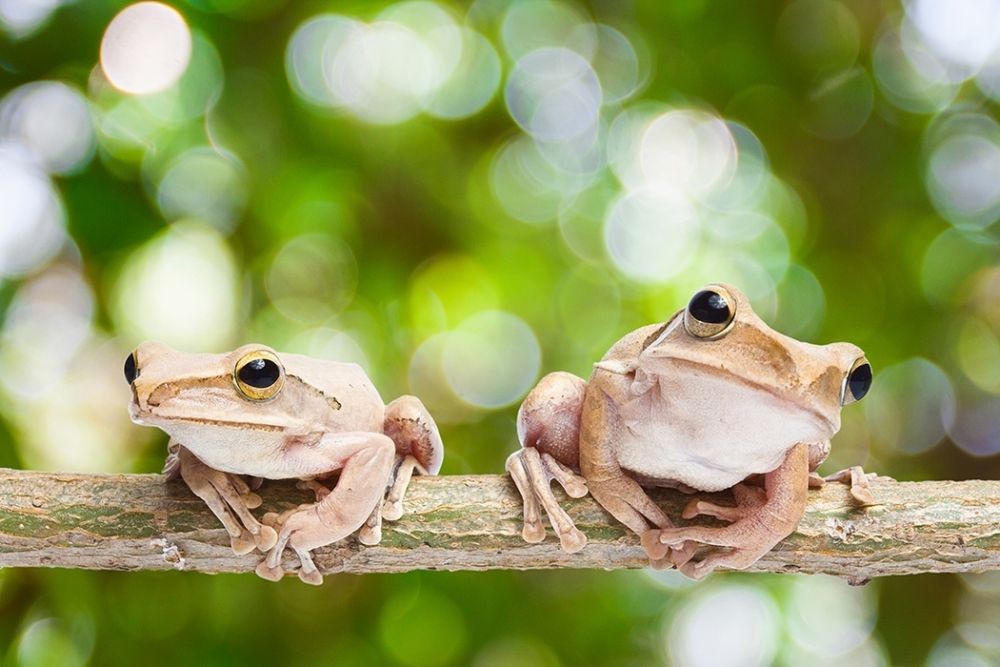
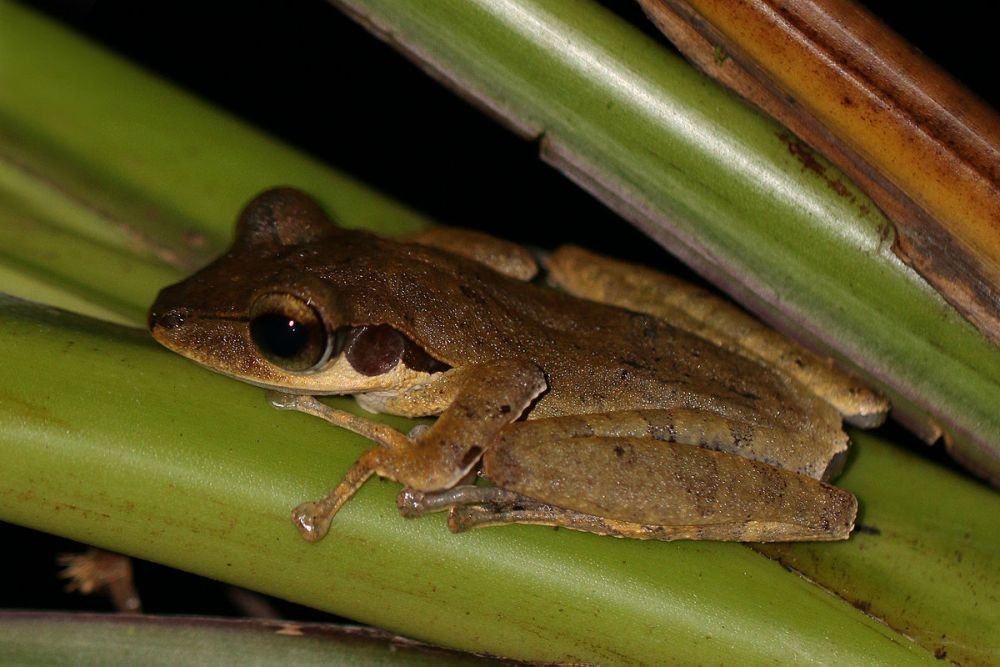
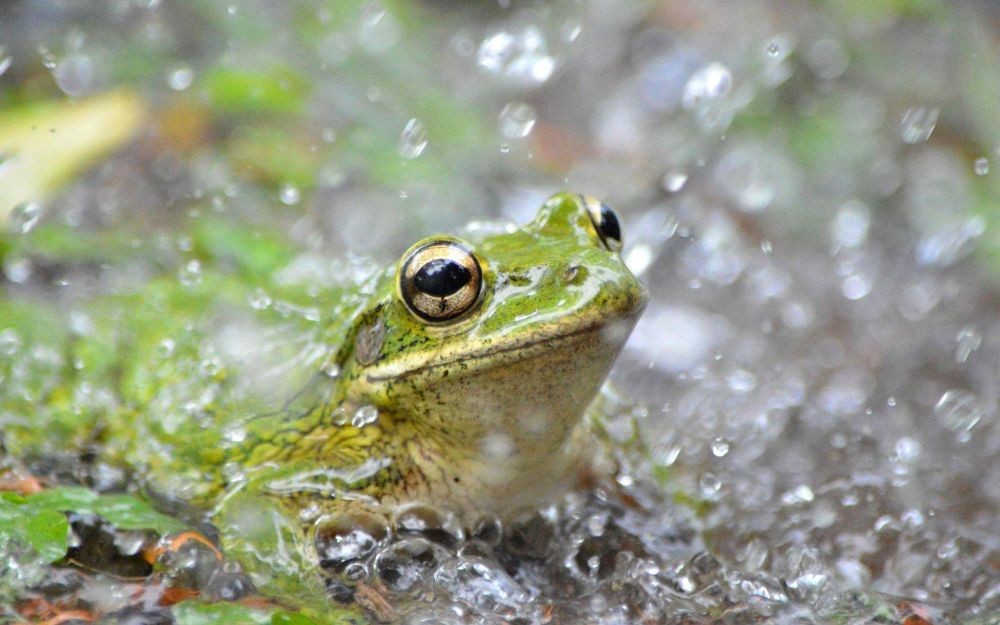
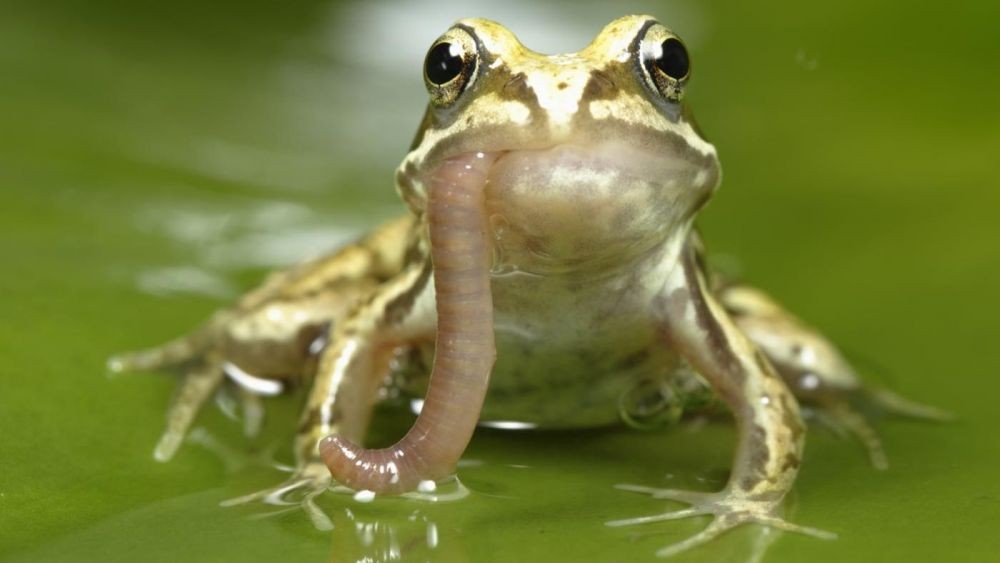
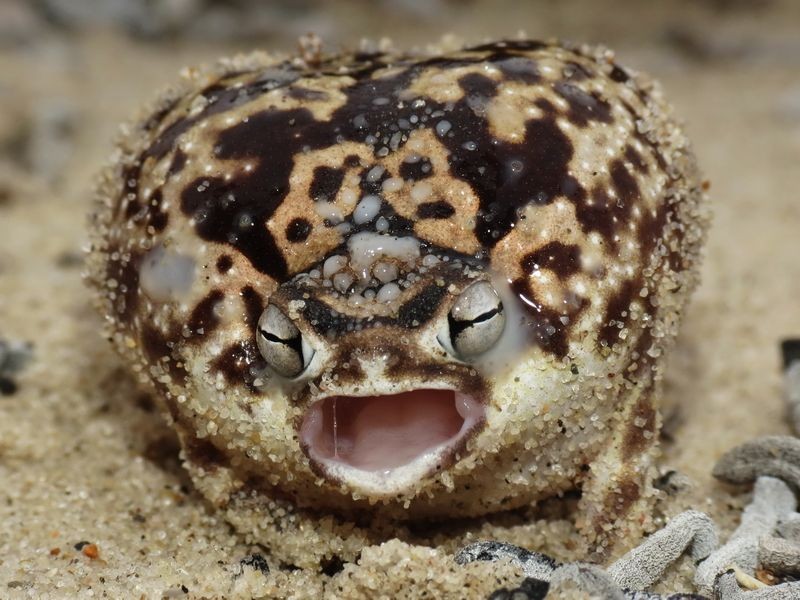
Anda tahu perbedaan antara katak dan kodok? Apakah keduanya merupakan jenis yang sama? Apakah suara “rekotok rekotok” yang sering terdengar di pinggir kali adalah suara kodok? Apakah katak maupun kodok memiliki manfaat bagi lingkungan?
Amir Hamidy, ahli herpetologi dari Lembaga Ilmu Pengetahuan Indonesia (LIPI), punya jawabannya. Menurut Amir, penyebutan katak atau kodok sebenarnya mengikuti konsep Bahasa Inggris dan morfologinya.
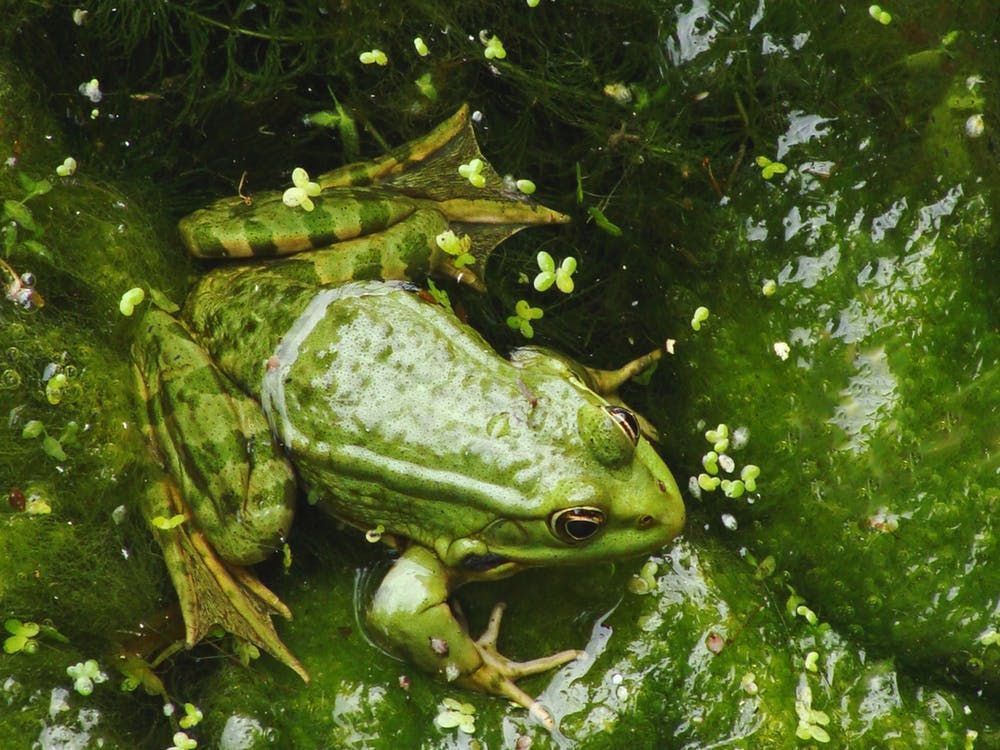
Dalam penamaan Bahasa Inggris, istilah toad untuk kodok, sementara froguntuk katak, karena mempresentasikan dua suku. Kodok berasal dari Suku Bufoidae, sementara katak dari Suku Ranidae. “Dilihat dari morfologi, kebanyakan kodok lebih berbintil sedangkan kulit katak lebih halus.”
Amir melanjutkan, kenyataannya di Indonesia, banyak jenis yang bila dilihat secara morfologi tidak hanya merepresentasikan Suku Bufonidae dan Ranidae saja. “Di Jawa Barat sendiri, ada enam suku yang mewakili keduanya. Penyebutan suatu jenis pun harus sinergis dengan sistematika dan tata nama ilmu hewan,” jelas Amir yang merupakan Kepala Laboratorium Herpetologi Bidang Zoologi Puslit Biologi LIPI, Cibinong.


Djoko T. Iskandar, dalam bukunya Amfibi Jawa dan Bali (1991), menjelaskan bahwa dalam Bahasa Indonesia, belum ada kesepakatan penggunaan sebutan katak atau kodok. Dijelaskannya, kodok adalah penamaan dari Bahasa Jawa. Di Jawa Barat, katak atau kodok disebut bangkong, sedangkan bancet untuk katak kecil. “Sementara di Jawa Tengah, katak kecil dipanggil percil yang berlaku untuk anakan katak atau kodok.”
Katak atau kodok, masuk Bangsa Anura yang persebarannya hampir merata di seluruh dunia. Cirinya adalah tubuh pendek dan lebar, terdiri dari kepala, badan, dan memiliki dua pasang tungkai yang tungkai belakangnya lebih besar. Kaki berselaput digunakan untuk melompat dan berenang. “Katak atau kodok memiliki pita suara, yang biasanya sang jantan akan mengeluarkan “Nyanyian” untuk menarik perhatian betina,” jelas buku tersebut.
Telur yang menetas, biasanya akan tumbuh menjadi larva yang berbeda dengan bentuk dewasanya, dikenal dengan nama berudu. Hampir semua berudu, akan mengalami metamorfosis saat menjadi dewasa, namun pada beberapa jenis ada yang langsung dewasa.


Mirza D Kusrini dalam bukunya Panduan Bergambar Identifikasi Amfibi Jawa Barat, menjelaskan di Indonesia ditemukan sekitar 450 jenis katak atau kodok yang mewakili 11 persen dari seluruh Bangsa Anura di dunia. Sekitar 28 jenis, ada di Jawa Barat, dari Suku Bufonidae, Dicroglossidae, Microhylidae, Megophyridae, Ranidae, dan Rhacophoridae.
“Bila ingin menemukan katak atau kodok, datangi habitat mereka. Kolam, genangan air, sungai dan wilayah teresterial (tumpukan serasah, di balik kayu-kayu rebah, dalam tanah) serta pohon. Kebanyakan katak atau kodok aktif malam hari, sekitar jam 7 malam hingga 4 pagi,” jelasnya.
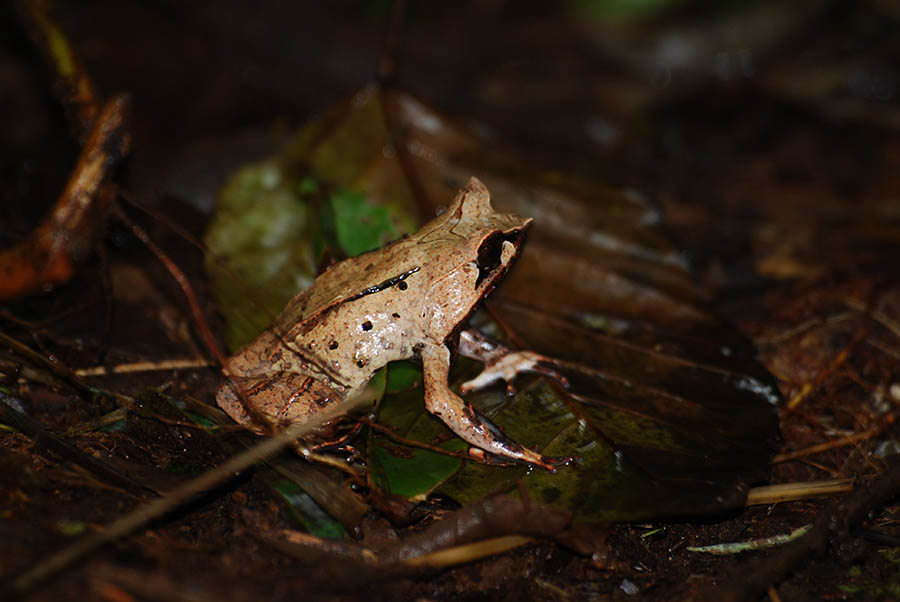
Megophrys montana merupakan katak yang tersebar di wilayah Jawa. Foto: Fransisca N Tirtaningtyas/Mongabay Indonesia

Manfaat di alam
Katak maupun kodok memiliki peran penting bagi ekosistem alam. Mirza mengungkapkan, katak merupakan pemakan serangga atau larva serangga yang berpotensi menjadi hama maupun sumber penyakit seperti nyamuk. Berudu dan katak dewasa senang memakan jentik-jentik nyamuk atau hama tanaman.
“Penelitian pakan katak oleh mahasiswa Institut Pertanian Bogor dengan membedah perut untuk melihat jenis apa saja yang dimakan, mendapatkan hasil memuaskan. Ternyata, ada kecoa dan rayap,” terang dosen dan peneliti herpetologi dari Institut Pertanian Bogor ini kepada Mongabay Indonesia, baru-baru ini.
Miki, biasa disapa, menjelaskan bahwa katak atau kodok juga berfungsi penting mengendalikan ekosistem. Serangga yang menjadi musuh petani akan berkurang dengan kehadiran katak atau kodok yang memangsanya, tanpa harus menggunakan pestisida.
Miki memberikan kiat untuk Anda yang ingin mendatangkan katak atau kodok di rumah. Buat lah kolam yang diisi air dan tumbuhan. Tumbuhan berfungsi tempat berlindungnya telur dan berudu serta memberikan pakan untuk anakan katak atau kodok. Bila tidak ada kolam, gunakan pot berisikan tumbuhan air. “Dengan menghadirkan katak atau kodok, kecoa dan rayap berkurang,” jelasnya.
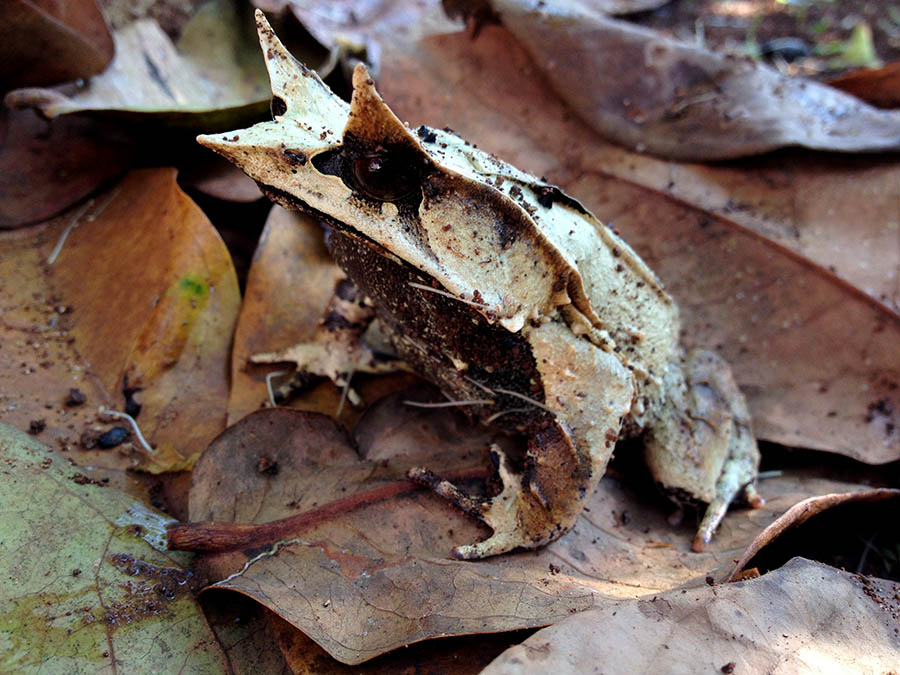
Megophrys nasuta atau katak-tanduk pinokio adalah jenis yang sering diperdagangkan sebagai satwa peliharaan. Foto: Amir Hamidy/LIPI

Ancaman
Kehidupan katak maupun kodok di alam, nyatanya tak luput dari ancaman. Ada empat faktor utama yang menyebabkan populasinya terganggu sebagaimana penjelasan Mirza dalam bukunya Pedoman Penelitian dan Survey Amfibi di Alam.
Pertama, hilangnya habitat dan lahan basah. Beberapa jenis amfibi teresterial, misalnya Leptobrachium hasseltii dan Megophrys montana (katak-tanduk gunung) adalah penghuni hutan sehingga hilangnya hutan dapat memusnahkan jenis ini. Perubahan lahan basah akibat eutrofikasi, pencemaran, introduksi ikan asing, hilangnya hutan dan padang sekitar dapat menurunkan populasi amfibi.
“Genangan atau kubangan yang muncul saat hujan ternyata penting bagi pembesaran berudu katak pohon atau jenis lain.”
Kedua, pencemaran dan radiasi UV-B di beberapa negara industri atau kawasan yang memiliki pencemaran udara tinggi mengakibatkan air hujan bersifat masam yang dapat mematikan embrio amfibi dan berudu.
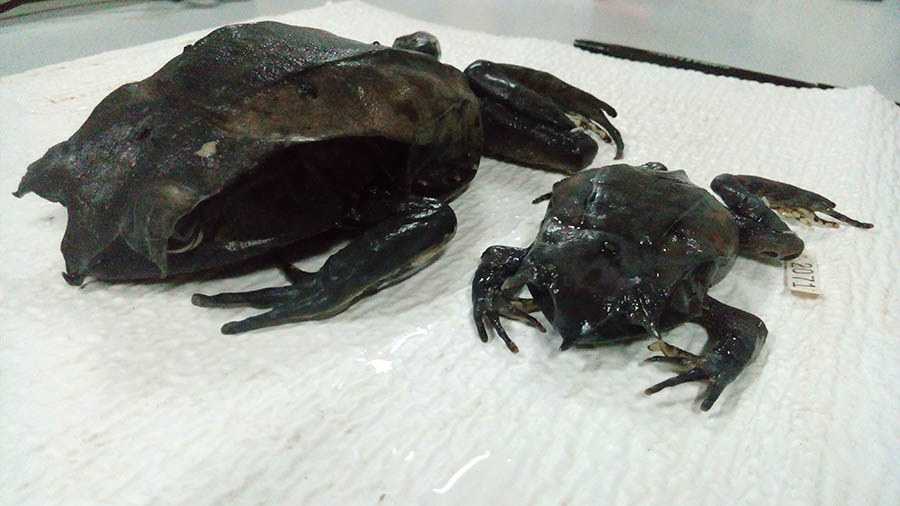
Spesimen Megophrys nasuta (katak-tanduk pinokio) yang ada di Laboratorium Herpetologi, Puslit Biologi LIPI, Cibinong. Foto: Fransisca N Tirtaningtyas/Mongabay Indonesia

Ketiga, bahan pencemar yang terkandung dalam sampah menjadikannya tumpukan berbahaya. Hasil penelitian menunjukkan amfibi rentan terhadap senyawa seperti logam berat, produk petroleum, herbisida dan pestisida. Penelitian di laboratorium secara konsisten menunjukkan, berudu lebih rentan terhadap pestisida ketimbang ikan.
Penelitian lain juga menunjukkan, jamur Batrachochytrium dendrobatidismenyebabkan penyakit chytridomycosis, yang diduga menjadi pangkal utama kematian banyak amfibi di Amerika Tengah, Australia, dan Asia.
Terkait kondisi tersebut, Amir mengatakan, Indonesia sudah sering impor katak meski LIPI tidak merekomendasikan. “Katak impor tidak bebas jamur dan saat masuk ke Indonesia tidak ada pemeriksaan. Bila terlepas atau sengaja diepaskan ke alam, berbahaya untuk jenis asli karena penularan jamur melalui air,” terangnya.
Masuknya jenis amfibi pendatang dari negara lain pun berisiko terhadap kehidupan jenis-jenis amfibi asli. Misalnya, jenis katak lembu Rana catesbeiana yang bentuk berudu dan dewasanya adalah predator. Bila sengaja dicampurkan, ia dapat memakan katak jenis lain.
Keempat, Indonesia merupakan negara pengekspor terbesar paha katak beku di dunia yang mencapai 4 ribu ton per tahun. “Selain itu juga, katak dan kodok diperjualbelikan antarnegara sebagai binatang peliharaan di terrarium,” jelas Mirza.

Referensi:
Iskandar DJ. 1998. Amfibi Jawa dan Bali. Puslitbang Biologi-LIPI, Bogor, Indonesia
Kusrini, MD. 2009. Pedoman Penelitian dan Survey Amfibi di Alam. Fakultas Kehutanan IPB, Bogor, Indonesia.
Kusrini, MD. 2013. Panduan Bergambar Identifikasi Amfibi Jawa Barat. Fakultas Kehutanan IPB dan Direktorat Konservasi Keanekaragaman Hayati Kementrian Lingkungan Hidup dan Kehutanan.



8 Fakta Kenapa Katak Berbunyi Ketika Hujan Turun, Apakah Lagi Nyanyi?


https://www.idntimes.com/science/discovery/viktor-yudha/fakta-katak-berbunyi-ketika-hujan-turun/full


8 Fakta Kenapa Katak Berbunyi Ketika Hujan Turun, Apakah Lagi Nyanyi?

Siapa pencinta hujan juga?
Ada banyak hal di sekitar kita yang kalau dipikir-pikir menarik untuk diketahui. Salah satunya adalah misteri kenapa katak berbunyi saat atau setelah hujan turun. Apa yang menyebabkan mereka begitu? Apakah itu bentuk nyanyian karena bahagia menyambut hujan? Dilansir dari Reference, yuk, kenali lewat fakta-fakta unik katak berikut ini!

1. Katak berbunyi setelah hujan karena tertarik dengan atmosfer yang basah

8 Fakta Kenapa Katak Berbunyi Ketika Hujan Turun, Apakah Lagi Nyanyi?science.howstuffworks.com
Mereka akan mencoba mencari tempat basah terbaik. Bagi mereka, tempat yang basah dan lembap membuat mereka nyaman.

2. Katak bersuara sebagai panggilan kawin

8 Fakta Kenapa Katak Berbunyi Ketika Hujan Turun, Apakah Lagi Nyanyi?fineartamerica.com
Musim hujan adalah musim yang disukai katak untuk kawin. Karena itu, katak mengeluarkan bunyi serak untuk mengirimkan sinyal. Sinyal ini berguna untuk mencari calon pasangan kawinnya.

3. Katak pun bersuara untuk melindungi teritorialnya dari katak jantan lain

8 Fakta Kenapa Katak Berbunyi Ketika Hujan Turun, Apakah Lagi Nyanyi?daily.jstor.org
Aktivitas kawin dan melindungi teritorial terjadi karena tanah menjadi basah saat hujan. Tanah basah semacam itu menjadi tempat nyaman bagi katak.

4. Selain basah, katak juga menyukai tempat gelap

8 Fakta Kenapa Katak Berbunyi Ketika Hujan Turun, Apakah Lagi Nyanyi?wikimedia.org
Itu semua berguna untuk menjaga kelembapan dan kulit amfibi mereka tetap sehat. Sebaliknya, jika katak berada di lingkungan panas, seperti di bawah sinar matahari langsung, mereka mudah mengering.

5. Sementara, saat hujan, katak akan bergerak dengan nyaman sembari menjaga suhu tubuhnya turun

8 Fakta Kenapa Katak Berbunyi Ketika Hujan Turun, Apakah Lagi Nyanyi?1freewallpapers.com
Setelahnya, dia akan mulai mencari pasangan atau menjaga teritorialnya dari pejantan lain.

6. Setelah hujan, katak pun akan mencari mangsa

8 Fakta Kenapa Katak Berbunyi Ketika Hujan Turun, Apakah Lagi Nyanyi?reference.com
Ada banyak mangsa yang dia cari, mulai dari serangga hingga cacing.

7. Katak bersuara serak dengan mengeluarkan suara melalui laringnya

8 Fakta Kenapa Katak Berbunyi Ketika Hujan Turun, Apakah Lagi Nyanyi?realmonstrosities.com
Dengan begitu, pita suaranya akan bergetar dan menghasilkan suara.

8. Katak pun memiliki kantung kulit mengembang di bagian bawah mulutnya

8 Fakta Kenapa Katak Berbunyi Ketika Hujan Turun, Apakah Lagi Nyanyi?treknature.com
Fungsinya adalah untuk memperkuat suara.
Itu tadi fakta unik tentang katak yang suka “bernyanyi” saat hujan. Fakta unik apa lagi yang ingin kamu tahu? Yuk, sampaikan di kolom komentar.

7 Sifat Teladan yang Patut Kita Ditiru Dari Seekor Katak


https://www.idntimes.com/life/inspiration/ramdan-7/7-sifat-teladan-yang-patut-kita-ditiru-dari-seekor-katak-c1c2/full

7 Sifat Teladan yang Patut Kita Ditiru Dari Seekor Katak

Jangan kira katak gak punya manfaat
Katak adalah hewan amfibi pemakan serangga yang dapat hidup di dua alam, yakni di darat maupun di air tawar. Katak memiliki kulit yang licin. Pada umumnya berwarna hijau atau merah kecokelatan. 
Bagi sebagian orang, hewan ini terlihat menjijikkan. Namun, jika di perhatikan, hewan poikiloterm ini adalah hewan yang luar biasa. Meski tubuhnya mungil, katak menjadi suatu indikator apakah suatu lingkungan telah tercemar atau tidak. Katak juga memiliki filosofi tersendiri dalam kehidupan manusia. Ada beberapa sifat katak yang patut kita contoh agar hidup dapat lebih bermakna. 

1. Mudah beradaptasi

7 Sifat Teladan yang Patut Kita Ditiru Dari Seekor KatakPexels/Nastya
Seperti yang kita tahu, katak dapat hidup di dua alam. Ini menandakan bahwa katak mampu menyesuaikan diri dengan lingkungannya. Manusia juga harus dapat beradaptasi dengan lingkungan dimana mereka tinggal agar dapat bertahan hidup

2. Selalu menatap ke depan

7 Sifat Teladan yang Patut Kita Ditiru Dari Seekor Katakpexels.com/pixabay
Katak tidak pernah melihat ke belakang. Ia selalu menatap ke depan dan terus melompat. Hal ini menjadi pelajaran bagi kita untuk selalu bergerak maju dan pantang mundur. Apalagi kita sebagai kaum millenial, pemikiran harus ke depan. Jika ingin sukses, belajarlah dari hewan ini. Wujudkan impian untuk masa depan yang cerah.

3. Sabar dan berproses

7 Sifat Teladan yang Patut Kita Ditiru Dari Seekor Katakpexels.com/Egor Kamelev
Seekor katak melewati proses evolusi yang panjang mulai dari telur, berubah menjadi berudu dan tumbuh menjadi katak dewasa yang dimaknai sebagai proses yang sabar. Kita sebagai manusia juga harus senantiasa bersabar dan menikmati setiap proses dalam kehidupan.

4. Berani mengambil tindakan

7 Sifat Teladan yang Patut Kita Ditiru Dari Seekor KatakPexels/Egor Kamelev
Kita dapat membayangkan seekor katak yang akan melompat dari ketinggian untuk bisa sampai menuju teratai dengan selamat. Ini berarti, katak berani mengambil resiko terhadap apa yang dilakukannya. Artinya, jika ingin maju, seseorang harus berani mengambil tindakan seperti yang dilakukan katak.

5. Memiliki jiwa petualang

7 Sifat Teladan yang Patut Kita Ditiru Dari Seekor Katakpexels.com/Tookapic
Pada dasarnya, katak adalah hewan penjelajah. Maka dari itu katak memiliki sifat petualang. Ia suka bertualang ke tempat-tempat baru. Dalam hidup, kita juga harus memiliki jiwa petualang agar kita dapat menemukan hal-hal baru yang sebelumnya tidak kita ketahui.

6. Gesit dan lincah

7 Sifat Teladan yang Patut Kita Ditiru Dari Seekor Katakpexels.com/pixabay
Jelas kita lihat, katak memang sangat lincah melompat dari satu tempat ke tempat lain. Gesit menghindar jika dirinya merasa terancam. Pastinya kita tidak mau kalah dengan katak dong, kita juga harus gesit dan lincah dalam melewati setiap rintangan dalam hidup.

7. Periang

7 Sifat Teladan yang Patut Kita Ditiru Dari Seekor Katakunsplash/Wayne Robinson
Katak ini hewan yang periang loh. Hal ini terbukti dengan nyanyian-nyanyian katak saat menanti datangnya hujan. Ia terus saja bernyanyi sampai hujan turun. Sama hal nya dengan manusia, harus riang serta gembira. Memiliki sifat periang memang sangat baik. Kita dapat menghibur orang lain dan membuat hidup lebih bahagia.
Nah, sudah tau kan kalau katak juga mengajarkan kita banyak hal. Sudah sepantasnya kita meneladani sifat-sifat katak tersebut. Intinya, teruslah melompat ke depan dan terus berjuang layaknya seekor katak.

Mashiach: The Messiah

http://www.mechon-mamre.org/jewfaq/mashiach.htm


Mashiach:  The Messiah

Level:  Intermediate
I believe with perfect faith in the coming of the mashiach, and though he may tarry, still I await him every day.
--a popular paraphrase of Principle 12 of Maimonides13 Principles of Faith

The Messianic Idea in Torah

Belief in the eventual coming of the mashiach is a basic and fundamental part of traditional Judaism.  It is part of Maimonides' 13 Principles of Faith, the minimum requirements of Jewish belief, commonly recited daily as brought above.  In the Shemoneh Esrei prayer, recited three times daily, we pray for all of the elements of the coming of the mashiach:  ingathering of the exiles, restoration of the Torah-based system of justice, an end to the apostates and heretics, reward for the righteous, rebuilding of Jerusalem, restoration of the kingdom of the descendants of King David, and restoration of Temple service.
Many modern scholars suggest that the messianic concept was introduced far after the beginning of the Jewish people at Mount Sinai, during the age of the prophets.  They note that the messianic concept is not clearly mentioned anywhere in the Written Torah (the first five books of the Bible).
However, traditional Judaism maintains that the messianic idea has always been a part of the Torah.  The mashiach is not mentioned explicitly in the Torah, because the Torah was written in terms that all the people could then understand, and the abstract concept of a distant future reward was then beyond the comprehension of many of the people.  However, the Torah contains several references to "the Latter Days" (acharit ha-yamim), which is considered the time of the mashiach; thus, the concept of mashiach was known in the most ancient times.
The term "mashiach" literally means the anointed one, and refers to the ancient practice of anointing kings with oil when they took the throne.  The mashiach is the one who will be anointed as king in the Latter Days.  He will be the very real king of a very real Torah government in the Land of Israel:  not some "spiritual" or "symbolic" king in Israel, as some have mistakenly thought (especially Christians), and certainly not some gifted Jewish spiritual leader outside the Land of Israel, as others have mistakenly thought (including thousands of Jews in our generation as well as the followers of earlier false Jewish "mashiachs" in generations past).  It should be mentioned that while it is not forbidden to foolishly believe that one is the mashiach despite that he is not, it is certainly not the sign of a good grasp of the Torah to be mislead as to his nature and role, described more fully below.
The word "mashiach" does not mean "savior".  The notion of an innocent, semi-divine (let alone fully divine) human being who will sacrifice himself to save us from the consequences of our own sins is a purely Christian concept that has no basis in normal Jewish thought, though it seems to have been invented or adopted by Jewish apostates in the early Church.  Unfortunately, this Christian concept has become so deeply ingrained in the English word "messiah" that this English word should probably no longer be used to refer to the Jewish concept.  Thus, we prefer to use the less familiar word "mashiach" throughout this page.

The Mashiach

The mashiach will be a great political leader descended by a pure male line from King David (Jeremiah 23,5).  The mashiach is often referred to as "mashiach ben David" (The Mashiach, son of David).  He will be well-versed in Jewish law, and observant of its commandments (Isaiah 11,2-5).  He will be a charismatic leader, inspiring others to follow his example.  He will be a great military figure who will win battles for Israel, freeing the Jews of foreign domination and establishing a Torah-based kingdom in Israel.  He will be a great judge, who makes righteous decisions (Jeremiah 33,15).  But above all, he will be a fully normal human being, not a god, demi-god, or other supernatural being.
It has been said that in every generation, a person is born with the potential to be the mashiach.  If the time is right for the messianic age within that person's lifetime, then that person will be the mashiach.  But if that person dies before he completes the mission of the mashiach, then that person is not the mashiach; thus, even if one could say that some historial Jewish figure was worthy of being the mashiach, since he did not reestablish a Torah kingdom in Israel, he could not possibly have been the real mashiach we wait for.

When Will the Mashiach Come?

There is a wide variety of opinions on the subject of when the mashiach will come.  Some of the Jews' greatest minds have cursed those who try to predict the time of the mashiach's coming, because errors in such predictions could cause people to lose faith in the messianic idea or in the Torah itself.  This actually happened in the 17th century, when Shabbtai Tzvi claimed to be the mashiach; when Tzvi converted to Islam under threat of death, many Jews converted with him.  Nevertheless, this "prohibition" has not stopped anybody from speculating about the time when the mashiach will come (including some who themselves spoke harshly of those who engaged in such vain efforts!).
Although some scholars believed that God has set aside a specific date for the coming of the mashiach, most authorities suggest that the conduct of mankind will determine the time of the mashiach's coming.  In general, it is believed that the mashiach will come in a time when he is most needed (because the world is so evil), or in a time when he is most deserved (because the world is so good).  For example, each of the following has been suggested as the time when the mashiach will come:
  • when all Israel repent a single day
  • when all Israel observe a single sabbath properly
  • when all Israel observe two sabbaths in a row properly
  • in a generation that is totally innocent, or totally guilty
  • in a generation that loses hope
  • in a generation where children are totally disrespectful towards their parents and elders (commonly thought to be "our generation", in every generation!)

What Will the Mashiach Do?

Before the time of the mashiach, there will be war and great suffering (Ezekiel 38,16).  Then the mashiach will bring about the political and spiritual redemption of the Jewish people by bringing all Jews outside Israel back to Israel, and restoring Jerusalem (Isaiah 11,11-12Jeremiah 23,830,3Hosea 3,4-5).  He will establish a Torah government in Israel that will be the center of all world government, both for Jews and Gentiles (Isaiah 2,2-411,1042,1).  He will rebuild the Temple and reestablish its worship (Jeremiah 33,18).  He will restore the religious court system of Israel, if it had not already been reestablished before him, and establish the Torah as the law of the land (Jeremiah 33,15).

The Messianic Age

The messianic age will be characterized by the peaceful co-existence of all people (Isaiah 2,4).  Hatred, intolerance, and war will cease to exist.  Some authorities suggest that the laws of nature will change, so that predatory beasts will no longer seek prey and agriculture will bring forth supernatural abundance (Isaiah 11,6-9); others like Maimonides, however, say that these statements are merely an allegory for peace and prosperity.  What is agreed on by all is a very optimistic picture of what real people can be like in this real world, the like of which has never been seen before.
All of the Jewish people will return from their exile among the nations to their home in Israel (Isaiah 11,11-12Jeremiah 23,830,3Hosea 3,4-5), and the law of the Jubilee as well as the rest of the special agricultural laws in the Torah will be reinstated.
In the messianic age, the whole world will recognize YHWH, the LORD God of Israel, as the only true God, and the Torah will be seen as the only true religion (Isaiah 2,311,10Micah 4,2-3Zechariah 14,9).  There will be no more murder, robbery, competition, or jealousy.

What About Jesus?

Jews know that Jesus could not possibly have been the mashiach.  Assuming that he existed, and assuming that the Christian scriptures are accurate in describing him (both of which are debatable), he simply did not fulfill the mission of the mashiach as Jews have always understood it.  Jesus neither did any of the things described above, nor did he bring about the anticipated messianic age.
On the contrary, another Jew born about a century later came far closer to fulfilling the messianic ideal than Jesus did.  His name was Shimeon ben Kosiba, known as Bar Kochba (son of a star), and he was a charismatic, brilliant, and harsh military figure.  Among others, Rabbi Akiba, one of the greatest scholars in Jewish history, believed that Bar Kochba was the mashiach.  Bar Kochba fought a war against the Roman Empire, catching the Tenth Legion by surprise and retaking Jerusalem.  He resumed sacrifices at the site of the Temple and made plans to rebuild the Temple.  He established a provisional government and began to issue coins in its name.  This is what the Jewish people were looking for in a mashiach; Jesus clearly does not fit into this mold, of course.  Ultimately, however, the Roman Empire crushed his revolt and killed Bar Kochba.  After his death, all acknowledged that he was not the mashiach (as Jesus' followers should have done with their pretender to be mashiach).
Throughout Jewish history, there have been many people who have claimed to be the mashiach, or whose followers have claimed that they were the mashiach:  Shimeon Bar Kochba, Shabbtai Tzvi, Jesus, and many others too numerous to name.  Leo Rosten reports some very entertaining accounts under the heading False Messiahs in his book, The Joys of Yiddish.  But all of these people died without fulfilling the mission of the mashiach; therefore, none of them was the mashiach.  Thus, the mashiach and the messianic age lie in our age or in a future age, not in the past.
In our generation, thousands of the Lubavitcher Rebbe's followers claim that their brilliant Rebbe was the mashiach.  But his more sensible students have now, after his death, expressed disappointment that it turned out that the Rebbe just did not fulfill the expectations described above in his lifetime, and admit that we are still waiting for the real mashiach to come.
May the Real Mashiach come soon!

Yom Kippur


Yom Kippur

Level:  Basic
Yom Kippur is probably the most important holiday of the Jewish year.  Many Jews who do not observe any other Jewish custom will refrain from work, fast and/or attend synagogue services on this day.  Yom Kippur occurs on the 10th day of Tishri.  The holiday is instituted at Leviticus 23,26 and following.
The name "Yom Kippur" means Day of Atonement, and that pretty much explains what the holiday is.  It is a day set aside to "afflict the soul", to atone for the sins of the past year.  In Days of Awe, we mentioned the "books" in which God inscribes all of our names.  On Yom Kippur, the judgment entered in these books is sealed.  This day is, essentially, your last appeal, your last chance to change the judgment, to demonstrate your repentance and make amends.
As noted in Days of Awe, Yom Kippur atones only for sins between man and God, not for sins against another person.  To atone for sins against another person, you must first seek reconciliation with that person, righting the wrongs you committed against them if possible.  That must all be done before Yom Kippur.
Yom Kippur is a complete Sabbath; no work can be performed on that day.  It is well-known that you are supposed to refrain from eating and drinking (even water) on Yom Kippur.  It is a complete, 25-hour fast beginning before sunset on the evening before Yom Kippur and ending after nightfall on the day of Yom Kippur.  The Talmud also specifies additional restrictions that are less well-known:  washing and bathing, anointing one's body (with cosmetics, deodorants, etc.), wearing leather shoes (Orthodox Jews routinely wear canvas sneakers under their dress clothes on Yom Kippur), and engaging in sexual relations are all prohibited on Yom Kippur.
As always, any of these restrictions can be lifted where a threat to life or health is involved.  In fact, children under the age of nine and women in childbirth (from the time labor begins until three days after birth) are not permitted to fast, even if they want to.  Older children and women from the third to the seventh day after childbirth are permitted to fast, but are permitted to break the fast if they feel the need to do so.  People with other illnesses should consult a physician and a rabbi for advice.
Most of the holiday is spent in the synagogue, in prayer.  In Orthodox synagogues, services begin early in the morning (8 or 9 AM) and continue until about 3 PM.  People then usually go home for an afternoon nap and return around 5 or 6 PM for the afternoon and evening services, which continue until nightfall.  The services end at nightfall, with the blowing of the tekiah gedolah, a long blast on the shofar.  See Rosh Hashanah for more about the shofar and its characteristic blasts.
It is customary to wear white on the holiday, which symbolizes purity and calls to mind the promise that our sins shall be made as white as snow (Isaiah 1,18).

Yom Kippur Liturgy

See also Jewish Liturgy generally.
The evening service that begins Yom Kippur is commonly known as Kol Nidre, named for the prayer that begins the service.  "Kol nidre" means all vows, and in this prayer, we ask God to annul all vows we may have made in the past year and all vows we may make in the next year.
This prayer has often been held up by anti-Semites as proof that Jews are untrustworthy (we do not keep our vows), and for this reason the Reform movement removed it from the liturgy for a while.  In fact, the reverse is true:  we make this prayer because we take vows so seriously that we consider ourselves bound even if we make the vows under duress or in times of stress when we are not thinking as well as we should.  This prayer gave comfort to those who were converted to Christianity by torture in various inquisitions, yet felt unable to break their vow to follow Christianity.  In recognition of this history, the Reform movement restored this prayer to its liturgy.
In any event, saying this prayer does not have any effect on our obligation to do as we have vowed to do, either individually or collectively.
There are many additions to the regular liturgy (there would have to be, to get such a long service).  Perhaps the most important addition is the confession of the sins of the community, which is inserted into the shemoneh Esrei (Amidah) prayer.  Note that all sins are confessed in the plural (we have done this, we have done that), emphasizing communal responsibility for sins.
There are two basic parts of this confession:  Ashamnu, a shorter, more general list (we have been treasonable, we have been aggressive, we have been slanderous . . .), and Al Chet, a longer and more specific list (for the sin we sinned before you forcibly or willingly, and for the sin we sinned before you by acting callously . . .) Frequent petitions for forgiveness are interspersed in these prayers.  There's also a catch-all confession:  "Forgive us the breach of positive commands and negative commands, whether or not they involved an act, whether or not they are known to us".
It is interesting to note that these confessions do not specifically address the kinds of ritual sins that some people think are the be-all-and-end-all of Judaism.  There is no "for the sin we have sinned before you by eating pork, and for the sin we have sinned against you by driving on Shabbat" (though obviously these are implicitly included in the catch-all).  The vast majority of the sins enumerated involve mistreatment of other people, most of them by speech (offensive speech, scoffing, slander, talebearing, and swearing falsely, to name a few).  These all come into the category of sin known as "lashon ha-ra" (literally, the evil tongue), which is considered a very serious sin in Judaism.
The concluding service of Yom Kippur, known as Ne'ilah, is one unique to the day.  It usually runs about 1 hour long.  The ark (a cabinet where the scrolls of the Torah are kept) is kept open throughout this service.  There is a tone of desperation in the prayers of this service.  The service is sometimes referred to as the closing of the gates; think of it as the "last chance" to get in a good word before the holiday ends.  The service ends with a very long blast of the shofar.  See Rosh Hashanah for more about the shofar and its characteristic blasts.

List of Dates

Yom Kippur occurs on the following days on the civil calendar:
  • 23 September 2015 (5776)
  • 12 October 2016 (5777)
  • 30 September 2017 (5778)
  • 19 September 2018 (5779)
  • 9 October 2019 (5780)

Yom Kippur

http://www.mechon-mamre.org/jewfaq/holiday4.htm#YKL


Yom Kippur

Level:  Basic
Yom Kippur is probably the most important holiday of the Jewish year.  Many Jews who do not observe any other Jewish custom will refrain from work, fast and/or attend synagogue services on this day.  Yom Kippur occurs on the 10th day of Tishri.  The holiday is instituted at Leviticus 23,26 and following.
The name "Yom Kippur" means Day of Atonement, and that pretty much explains what the holiday is.  It is a day set aside to "afflict the soul", to atone for the sins of the past year.  In Days of Awe, we mentioned the "books" in which God inscribes all of our names.  On Yom Kippur, the judgment entered in these books is sealed.  This day is, essentially, your last appeal, your last chance to change the judgment, to demonstrate your repentance and make amends.
As noted in Days of Awe, Yom Kippur atones only for sins between man and God, not for sins against another person.  To atone for sins against another person, you must first seek reconciliation with that person, righting the wrongs you committed against them if possible.  That must all be done before Yom Kippur.
Yom Kippur is a complete Sabbath; no work can be performed on that day.  It is well-known that you are supposed to refrain from eating and drinking (even water) on Yom Kippur.  It is a complete, 25-hour fast beginning before sunset on the evening before Yom Kippur and ending after nightfall on the day of Yom Kippur.  The Talmud also specifies additional restrictions that are less well-known:  washing and bathing, anointing one's body (with cosmetics, deodorants, etc.), wearing leather shoes (Orthodox Jews routinely wear canvas sneakers under their dress clothes on Yom Kippur), and engaging in sexual relations are all prohibited on Yom Kippur.
As always, any of these restrictions can be lifted where a threat to life or health is involved.  In fact, children under the age of nine and women in childbirth (from the time labor begins until three days after birth) are not permitted to fast, even if they want to.  Older children and women from the third to the seventh day after childbirth are permitted to fast, but are permitted to break the fast if they feel the need to do so.  People with other illnesses should consult a physician and a rabbi for advice.
Most of the holiday is spent in the synagogue, in prayer.  In Orthodox synagogues, services begin early in the morning (8 or 9 AM) and continue until about 3 PM.  People then usually go home for an afternoon nap and return around 5 or 6 PM for the afternoon and evening services, which continue until nightfall.  The services end at nightfall, with the blowing of the tekiah gedolah, a long blast on the shofar.  See Rosh Hashanah for more about the shofar and its characteristic blasts.
It is customary to wear white on the holiday, which symbolizes purity and calls to mind the promise that our sins shall be made as white as snow (Isaiah 1,18).

Yom Kippur Liturgy

See also Jewish Liturgy generally.
The evening service that begins Yom Kippur is commonly known as Kol Nidre, named for the prayer that begins the service.  "Kol nidre" means all vows, and in this prayer, we ask God to annul all vows we may have made in the past year and all vows we may make in the next year.
This prayer has often been held up by anti-Semites as proof that Jews are untrustworthy (we do not keep our vows), and for this reason the Reform movement removed it from the liturgy for a while.  In fact, the reverse is true:  we make this prayer because we take vows so seriously that we consider ourselves bound even if we make the vows under duress or in times of stress when we are not thinking as well as we should.  This prayer gave comfort to those who were converted to Christianity by torture in various inquisitions, yet felt unable to break their vow to follow Christianity.  In recognition of this history, the Reform movement restored this prayer to its liturgy.
In any event, saying this prayer does not have any effect on our obligation to do as we have vowed to do, either individually or collectively.
There are many additions to the regular liturgy (there would have to be, to get such a long service).  Perhaps the most important addition is the confession of the sins of the community, which is inserted into the shemoneh Esrei (Amidah) prayer.  Note that all sins are confessed in the plural (we have done this, we have done that), emphasizing communal responsibility for sins.
There are two basic parts of this confession:  Ashamnu, a shorter, more general list (we have been treasonable, we have been aggressive, we have been slanderous . . .), and Al Chet, a longer and more specific list (for the sin we sinned before you forcibly or willingly, and for the sin we sinned before you by acting callously . . .) Frequent petitions for forgiveness are interspersed in these prayers.  There's also a catch-all confession:  "Forgive us the breach of positive commands and negative commands, whether or not they involved an act, whether or not they are known to us".
It is interesting to note that these confessions do not specifically address the kinds of ritual sins that some people think are the be-all-and-end-all of Judaism.  There is no "for the sin we have sinned before you by eating pork, and for the sin we have sinned against you by driving on Shabbat" (though obviously these are implicitly included in the catch-all).  The vast majority of the sins enumerated involve mistreatment of other people, most of them by speech (offensive speech, scoffing, slander, talebearing, and swearing falsely, to name a few).  These all come into the category of sin known as "lashon ha-ra" (literally, the evil tongue), which is considered a very serious sin in Judaism.
The concluding service of Yom Kippur, known as Ne'ilah, is one unique to the day.  It usually runs about 1 hour long.  The ark (a cabinet where the scrolls of the Torah are kept) is kept open throughout this service.  There is a tone of desperation in the prayers of this service.  The service is sometimes referred to as the closing of the gates; think of it as the "last chance" to get in a good word before the holiday ends.  The service ends with a very long blast of the shofar.  See Rosh Hashanah for more about the shofar and its characteristic blasts.

List of Dates

Yom Kippur occurs on the following days on the civil calendar:
  • 23 September 2015 (5776)
  • 12 October 2016 (5777)
  • 30 September 2017 (5778)
  • 19 September 2018 (5779)
  • 9 October 2019 (5780)

Jewish Liturgy

http://www.mechon-mamre.org/jewfaq/liturgy.htm


Jewish Liturgy

Level:  Intermediate
Observant Jews pray in formal worship services three times a day, every day:  at evening (Ma'ariv), in the morning (Shacharit), and in the afternoon (Minchah).  Daily prayers are collected in a book called a siddur, which derives from the Hebrew root meaning order, because the siddur shows the order of prayers.  It is the same root as the word seder, which refers to the Passover home service.
Undoubtedly our oldest fixed daily prayer is the Shema.  This consists of Deuteronomy 6,4-9Deuteronomy 11,13-21, and Numbers 15,37-41.  Note that the first paragraph commands us to speak of these matters "when you retire and when you arise".  From ancient times, this commandment was fulfilled by reciting the Shema twice a day:  morning and night.
The next major development in Jewish prayer occurred during the Babylonian Exile, 6th century B.C.E. People were not able to sacrifice in the Temple at that time, so they used prayer as a substitute for sacrifice.  "The offerings of our lips instead of bulls", as Hosea said.  People got together to pray three times a day, corresponding to the two daily sacrifices morning and afternoon and the burning of what was left over of the sacrifices at night.  There was an additional prayer service on Sabbaths and certain holidays, to correspond to the additional sacrifices of those days.  Some suggest that this may already have been a common practice among the pious before the Exile.
After the Exile, these daily prayer services continued.  In the 5th century B.C.E., the Men of the Great Assembly composed a basic prayer, covering just about everything you could want to pray about.  This is the "Shemoneh Esrei", which means 18 and refers to the 18 blessings originally contained within the prayer.  It is also referred to as the Amidah (standing, because we stand while we recite it), or Tefillah (prayer, as in The Prayer, because it is the essence of all Jewish prayer).  This prayer is the cornerstone of every Jewish service.
The blessings of the Shemoneh Esrei can be broken down into 3 groups:  three blessings praising God, thirteen making requests (forgiveness, redemption, health, prosperity, rain in its season, ingathering of exiles, etc.), and three expressing gratitude and taking leave.  But wait!  That is 19!  And did we not just say that this prayer is called 18?
One of the thirteen requests (the one against heretics) was added around the 2nd century C.E., in response to the growing threat of heresy (primarily Christianity), but at that time, the prayer was already commonly known as the Shemoneh Esrei, and the name stuck, even though there were now 19 blessings.
Another important part of certain prayer services is a reading from the Torah (first 5 books of the Bible) and the Prophets.  The Torah has been divided into sections, so that if each of these sections is read and studied for a week, we can cover the entire Torah in a year every year (this works nicely in 13-month leap years, but in 12-month regular years we double up shorter portions on a few weeks).  At various times in our history, our oppressors did not permit us to have public readings of the Torah, so we read a roughly corresponding section from the Prophets (referred to as a Haftarah).  Today, we read both the Torah portion and the Haftarah portion.  The Torah is read on Mondays, Thursdays, Sabbaths, and some "holidays" (including fasts).  The Haftarah is read on Sabbaths and some holidays.  The Torah and haftarah readings are performed with great ceremony:  the Torah is paraded around the room before it is brought to rest on the bimah (podium), and it is considered an honor to have the opportunity to recite a blessing and do the reading (this honor is called an aliyah).  For more information, see Weekly Torah Readings.
That is the heart of the Jewish prayer service.  There are a few other matters that should be mentioned, though.  There is a long series of morning blessings at the beginning of the morning service.  Some people recite these at home.  They deal with a lot of concerns with getting up in the morning, and things we are obligated to do daily.  There is a section called Pesukei d'Zemira (verses of song), which includes a lot of Psalms and hymns.  Some like to think of it as a warm-up, getting you in the mood for prayer in the morning.
There are also a few particularly significant prayers.  The most important in the popular mind is the Kaddish, the only major prayer in Aramaic, which praises God.  Here is a small piece of it, in English:
May His great Name grow exalted and sanctified in the world that He created as He willed.  May He give reign to His kingship in your lifetimes and in your days, and in the lifetimes of the entire family of Israel, swiftly and soon.  May His great Name be blessed forever and ever.  Blessed, praised, glorified, exalted, extolled, mighty . . .
There are several variations on it for different times in the service.  One variation is set aside for mourners to recite, the congregation only providing the required responses.  Many people think of the Kaddish as a mourner's prayer, because the oldest son customarily recites it for a certain period after a parent's death, but in fact it is much broader than that.  It seems that originally it separated each portion of the service, and a quick glance at any prayer book or our outline below shows that it is recited between each section; in recent generations, it has become to be used as a mourner's prayer, even outside the context of formal prayer services or Torah study.
Another popular prayer is Aleinu, which most people recite at or near the end of every service, though it is required only within Musaf on Rosh Hashanah.  It also praises God.  Here is a little of it in English, to give you an idea:
It is our duty to praise the Master of all, to ascribe greatness to the Molder of primeval creation, for He has not made us like the nations of the lands . . .  Therefore, we put our hope in you, Adonai our God, that we may soon see Your mighty splendor . . .  On that day, Adonai will be One and His Name will be One.
On certain holidays, we also recite Hallel, which consists of Psalms 113-118.
Many holidays have special additions to the liturgy.  See Yom Kippur Liturgy for additions related to that holiday.

Outline of Services

There are a few other things, but this is a pretty good idea of what is involved.  Here is an outline of the order of the daily services:
  1. Evening Service (Ma'ariv)
    1. Shema and its blessings
    2. Kaddish
    3. Silent Amidah (standing prayer)
    4. Kaddish
  2. Morning Service (Shacharit)
    1. Kaddish
    2. Shema and its blessings
    3. Amidah
    4. Kaddish
    5. Hallel, if appropriate
    6. Torah reading (Mondays, Thursdays, Sabbaths, and holidays) followed by Kaddish
    7. Ashrei (Psalm 145), and other closing prayers, Psalms, and hymns (not on Sabbaths and holidays; recited at the end of Musaf instead on those days) followed by Kaddish
  3. Additional Service (Musaf) (Sabbaths and holidays only; recited immediately after Shacharit)
    1. Amidah
    2. Kaddish
    3. closing prayers, Psalms, and hymns
    4. Kaddish
  4. Afternoon Service (Minchah)
    1. Ashrei (Psalm 145)
    2. Kaddish
    3. Amidah
    4. Kaddish

Variations from Movement to Movement

The above is according to Orthodox practice.  The Reform service, although much shorter, follows the same basic structure and contains shorter versions of the same prayers with a few significant changes in content (for example, in one blessing of the Shemoneh Esrei, instead of praising God who "gives life to the dead", they praise God who "gives life to all" because they do not believe in resurrection).  The Conservative version is very similar to the Orthodox version, and contains only minor variations in the content of the prayers (similar to the Reform example).  See Movements of Judaism for more on the theological distinction between Orthodox, Conservative, and Reform.
There are a few significant differences in the way that services are conducted in different movements:
  1. In Orthodox, women and men are seated separately; in Reform and Conservative, all sit together.  See The Role of Women in the Synagogue.
  2. In Orthodox and usually Conservative, everything is in Hebrew.  In Reform, most is done in the local language, though they are increasingly using Hebrew.
  3. In Orthodox, the person leading the service has his back to the congregation, and prays facing the same direction as the congregation; in Conservative and Reform, the person leading the service faces the congregation.
  4. Conservative and Reform are rather rigidly structured:  everybody shows up at the same time, leaves at the same time, and does the same thing at the same time; Orthodox is somewhat more free-form:  people show up when they show up, catch up to everybody else at their own pace, often do things differently than everybody else.  This is difficult if you do not know what you are doing, but once you have got a handle on the service, you may find it much more comfortable and inspirational than trying to stay in unison.